



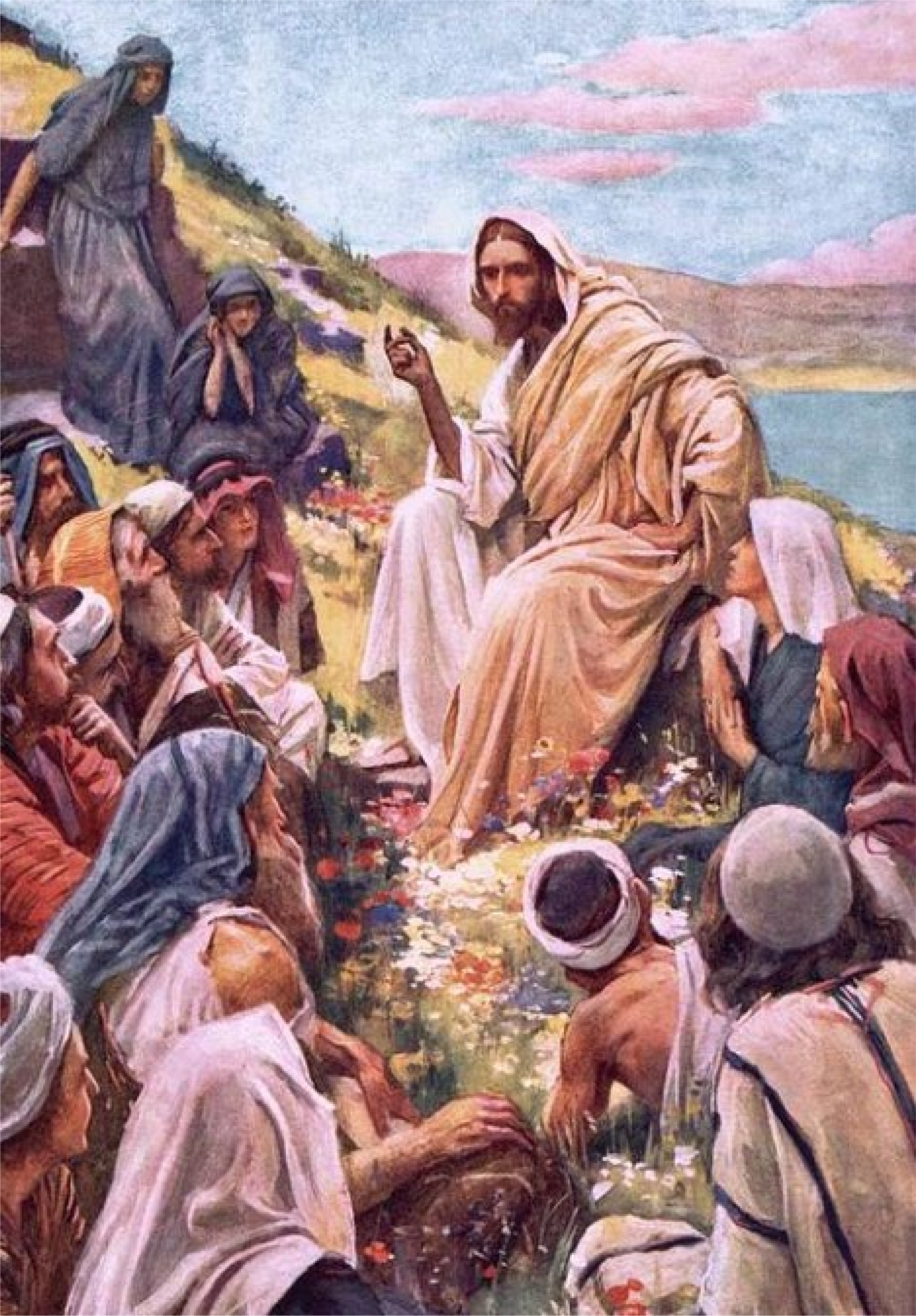
Week 4 Day 1
 Listen:
Do Not Take the Lord’s Name in Vain
Matthew 5:33-37
Again, you have heard that it has been declared to the ancients, Thou shalt not swear falsely, but shalt render to the Lord thine oaths. But I say to you, Swear not at all; neither by the heaven, for it is the throne of God; nor by the earth, for it is the footstool of His feet; nor by Jerusalem, for it is the city of the great King. Neither shalt thou swear by thy head, because thou canst not make one hair white or black. But let your word be, Yes, yes; No, no; and whatever is beyond these is from evil.
Exodus 20:7
Thou shalt not take the name of Jehovah thy God in vain; for Jehovah will not hold him innocent who takes His name in vain.
Revelation 4:8
And the four animals, each one by itself, had six wings around [it]; and [they were] full of eyes within; and they had no rest day and night, saying, Holy, holy, holy, Lord God Almighty, Who was, and Who is, and Who is to come.
Apocalypse Revealed 13:2
The name Jehovah signifies is; and He who is, or who is Being itself, the same is also He who was, and is to come, for in Him the past and the future are present; hence He is, without time, eternal, and without place, infinite. This also is acknowledged by the church in the doctrine of the Trinity, called Athanasian, in which are these words: “The Father is eternal and infinite, the Son is eternal and infinite, and the Holy Spirit is eternal and infinite, but yet there are not three eternals and infinites, but one.” That this one is the Lord, is demonstrated in The Doctrine of the New Jerusalem concerning the Lord.
Divine Providence 230
The profanation of what is holy is meant in the second commandment of the Decalogue, “Thou shalt not profane the name of thy God”; and that it ought not to be profaned is meant by these words in the Lord’s Prayer, “Hallowed be thy name.”
Scarcely anyone in the Christian world knows what is meant by the name of God. The reason why this is not known is that in the spiritual world names are not as in the natural world, but everyone has a name according to the quality of his love and wisdom; for as soon as anyone enters a society or into association with others he is named there according to his character. This naming is effected by spiritual language, which is such that it can give a name to everything, because there each letter signifies one thing and the letters combined into one word, forming a person’s name, include the entire state of what is named. This is one of the wonderful things of the spiritual world.
Hence it is clear that by “the name” of God in the Word is signified God with all the Divine that is in Him and that proceeds from Him. And as the Word is the Divine proceeding, it is the name of God; and as all the Divine things which are called the spiritual things of the Church are from the Word, they, too, are the name of God.
True Christian Religion 297
THE SECOND COMMANDMENT: Thou shalt not take the name of Jehovah thy God in vain, for Jehovah will not hold him guiltless that has taken His name in vain. In the natural sense, which is the sense of the letter, to take the name of Jehovah God in vain means the name itself, and its abuse in various kinds of conversation, especially in false speaking or lying, and in useless oaths or oaths to exculpate oneself in evil intentions (that is, oaths with imprecations), also when employed in witchcraft and spells. But to swear by God and His holiness, by the Word or the Gospel, at coronations, inaugurations into the priesthood, and inductions into offices of trust, is not to take the name of God in vain, unless he who takes the oath afterwards discards his promises as vain.
But the name of God, because it is holiness itself, must be used continually in the holy things pertaining to the church, as in prayers, psalms, and all worship, also in preaching, and in writing on ecclesiastical subjects. This is so because God is in all things of religion, and when He is solemnly invoked, He is present through His name and hears. In such ways the name of God is hallowed.
That the name of Jehovah God is in itself holy is evident from that name, in that the Jews since their earliest age have not dared and do not dare to utter the name Jehovah; and for their sake the writers of the Gospels and the apostles were unwilling to use it, and used the name “Lord” instead, as is evident from various passages translated from the Old Testament into the New, where the name “Lord” is used instead of “Jehovah” (as in Matt. 22:37; Luke 10:27, compared with Deut. 6:5, and other passages).
That the name of Jesus is in like manner holy is known from the saying of the apostle that at this name, every knee is bowed or should be bowed in heaven and on earth1; and furthermore from this, that no devil in hell can utter that name. There are many names of God that must not be taken in vain, as Jehovah, Jehovah God, and Jehovah of Hosts; the Holy One of Israel, Jesus and Christ, and the Holy Spirit.
1[See Philippians 2:10 and Romans 14:11; and Isaiah 45:23]
Questions and Comments
- How do we change the culture around us where the name of God is not held holy?
- What names of the Lord are most comforting? Challenging?
- Why is it that the Devils are unable to speak the name “Jesus”? (But they can say God—see True Christian Religion 111:3, Divine Providence 262:8.)
| previous |  |
next |
|---|