



Week 3 Day 4
 Listen:
Matrimony is for Life
Conjugial Love 271
(3) That the affections according to which matrimony is commonly contracted in the world are external....
(4) But that if there are not internal affections within that conjoin the minds, matrimony is loosened in the house....
Conjugial Love 276
(5) That nevertheless matrimony in the world is to endure to the end of life. This is stated, that there may be presented more manifestly to reason the necessity, the utility, and the truth, that where there is not genuine conjugial love it is yet to be feigned, or to have it appear as if there were. It would not be so if marriages entered into were not covenanted to the end of life, but were dissolvable at will, as they were with the Israelitish nation, which arrogated to itself the liberty to put away wives for whatever cause, as appears from these words in Matthew:
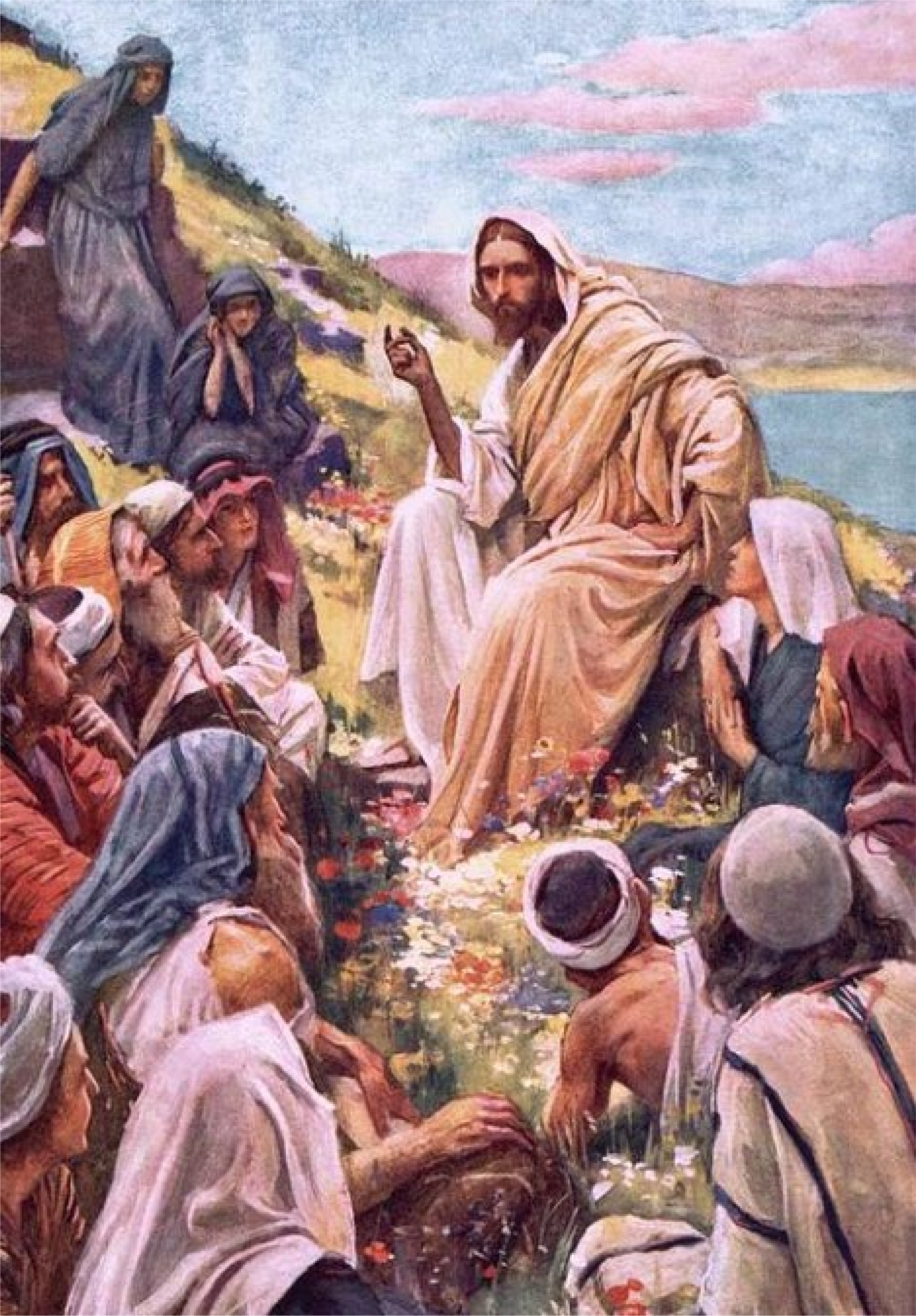
The Pharisees came to Jesus, saying, “Is it lawful for a man to put away his wife for every cause?” And when Jesus answered that it is not lawful to put away a wife and marry another except for scortation, they replied that yet Moses commanded to give her a bill of divorce and put her away. And the disciples said, “If the case of a man with a wife be so, it is not expedient to marry” (19:3-10).
[2] As the marriage covenant is therefore a covenant for life, it follows that appearances of love and friendship between married partners are necessities. That the matrimony contracted is to endure to the end of life in the world, is from Divine law; and because it is from this, it is also from rational law; and thence from civil law. It is from the Divine law that a man may not put away his wife and marry another except for scortation, as above. It is from rational law, because this is founded on the spiritual—for Divine law and rational law are one law. From the latter and the former, or through the latter from the former, one may see the great number of enormities and the destructions of societies that would come from the dissolutions of marriages or the sending away of wives before death at the pleasure of the husband. Those enormities, and the destructions of societies may be realized in some fulness from the discussion concerning the origin of conjugial love by those gathered together from the nine kingdoms, in the Relation at n. 103-115, to which there is no need to add further reasons.
But these reasons do not prevent the permission of separations for their own causes, of which above at n. 252-254; and also of concubinage, of which in the Second Part.
Conjugial Love 105
“[M]arriage... has been prescribed by law to restrain the inborn urges in people for adulterous relationships that destroy the soul, pollute the mind’s reason, corrupt morals, and waste the body with disease. For adulterous relationships are not human but beastlike, not rational but animal, and thus not at all Christian but barbarian.”
Conjugial Love 107
“[A] love for the opposite sex is unrestricted, uninhibited, liberated, indiscriminate and fickle, while conjugial love is restricted, directed, contained, sure and constant. Married love has therefore been prescribed and established by the prudence of human wisdom, because otherwise there would be no empire, no kingdom, no commonwealth, indeed no society, but people would roam through the fields and forests in bands and troops with licentious and stolen women, and they would flee from place to place to escape bloody slaughter, rape and pillage, by which the whole human race would be wiped out of existence.”
Conjugial Love 109
“We fellow countrymen in our party looked around for the causes of the origin of conjugial love, and we agreed on two. One of these is the proper upbringing of children, and the other, the clear claim of heirs to their inheritances.... [C]hildren conceived and born of married love become the proper and true offspring of both parents; and as objects of a parental love that is deepened by their being of legitimate descent, they are raised to become the heirs of all their parents’ possessions, both spiritual and natural. Reason sees that the public good is founded on a proper upbringing of children and on the clear claim of heirs to their inheritances.... [M]arried love has engraved on it the salvation of the whole human race, which is what we mean by the public good.”
Conjugial Love 332
If one seeks the reason why polygamous marriages have been utterly condemned by the Christian world, no one, endowed with whatever gift of... genius, can clearly see the cause unless he is first instructed....
It is known that the institution of monogamous marriage is founded on the Lord’s Word, that whoever shall send away his wife except for scortation and marry another, commits adultery; and that from the beginning, or from the first institution of marriages, it was ordained that two should become one flesh; and that man should not put asunder what God has joined together (Matt. 19:3-11).
But although the Lord dictated these words out of the Divine law inscribed on marriage, yet, if the understanding cannot support it with some reason of its own, it may even, by turns to which it is accustomed and by sinister interpretations, get around that Divine law and bring it into obscure ambiguity, and finally into an affirmative-negative, affirmative because it is according to the civil law also, and negative because it is not according to their own rational sight. Into this state the human mind will fall if it is not first instructed... that there is a love truly conjugial; that it can exist only between two; that it cannot exist between two except from the Lord alone; and that upon that love heaven is inscribed with all its felicities. [See also CL 339-340.]
Questions and Comments
- At the end of CL 332, we are instructed in the spiritual reasons why monogamy is essential. CL 276 and 105-109 remind us of the civil consequences of the rewards and punishments of committing or failing to commit to a lifelong monogamous marriage. Can you think of other consequences?
- People often marry for external reasons and then hit patches. What does the Lord urge us to do then? What are some ways to weather a cold spell?
| previous |  |
next |
|---|